Power

Data centers use power. The real question is how that power is planned and paid for.

Data centers are large electrical customers, but that does not automatically mean residents pay more. The impact depends on utility planning, rate design, grid upgrades, and who is responsible for new infrastructure.

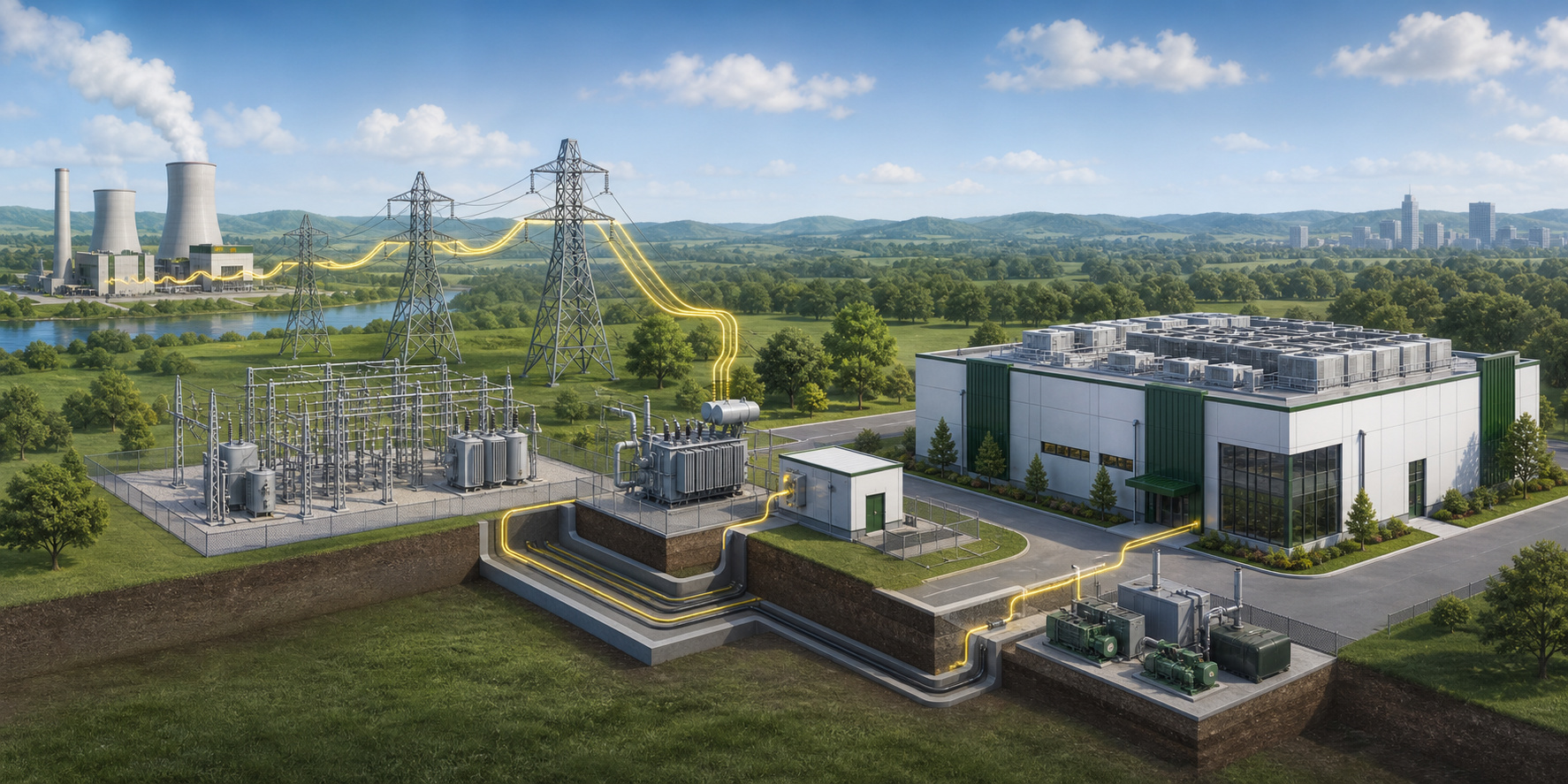
The simple power path

Electricity flows from generation through transmission and distribution equipment before reaching the data center. Larger projects often require utility studies, new feeders, substations, or dedicated infrastructure.

Generation
->
Transmission / Substation
->
Data Center Load
Educational illustration of power moving through grid infrastructure to a data center

The power question is not just "how many megawatts?"

Megawatts describe size. Community impact depends on timing, grid readiness, and cost responsibility.

Download power visual
Load size Initial MW, full buildout MW, rack density, and support equipment load.
Load ramp Whether the load arrives gradually over phases or all at once.
Grid upgrades Substations, feeders, transformers, transmission, switchgear, or dedicated lines.
Cost allocation Whether project-related costs are paid by the developer, utility, special tariff, or general customers.

What people usually get wrong

Myth: all customers pay for the data center

Not always. Large customers may pay special rates, demand charges, interconnection costs, or direct infrastructure contributions.

Myth: using power means harming the grid

Large loads can stress a weak grid, but properly planned projects can also justify upgrades that improve local reliability.

Myth: AI power use is the same as normal IT

AI workloads can concentrate much more power into fewer racks, which changes cooling, electrical design, and backup planning.

Power deep dives

Grid

Grid impact

How large electrical loads interact with substations, transmission lines, and local reliability.

Rates

Electric rates

How large commercial and industrial users are usually billed differently than homes.

Reliability

Backup power and reliability

Why data centers use UPS systems, generators, batteries, and redundant electrical paths.

What communities should ask

Who pays for upgrades?

Ask whether new substations, feeders, transformers, or transmission work are paid by the project, the utility, or ratepayers.

What is the load ramp?

A 100 MW project usually does not turn on all at once. Communities should ask for the expected ramp schedule.

What reliability standard is required?

Data centers often need very reliable service, but the design should also protect the local grid.

Key point: A data center's power impact should be reviewed through utility planning, rate structure, infrastructure responsibility, and community benefit - not fear of the word "megawatt."