One-Stop Guide

A practical guide to data centers for residents, schools, cities, and project teams.

Data center conversations often mix real concerns with broad assumptions. This guide helps people ask better questions about power, water, AI, jobs, land use, noise, public benefits, and local protections.

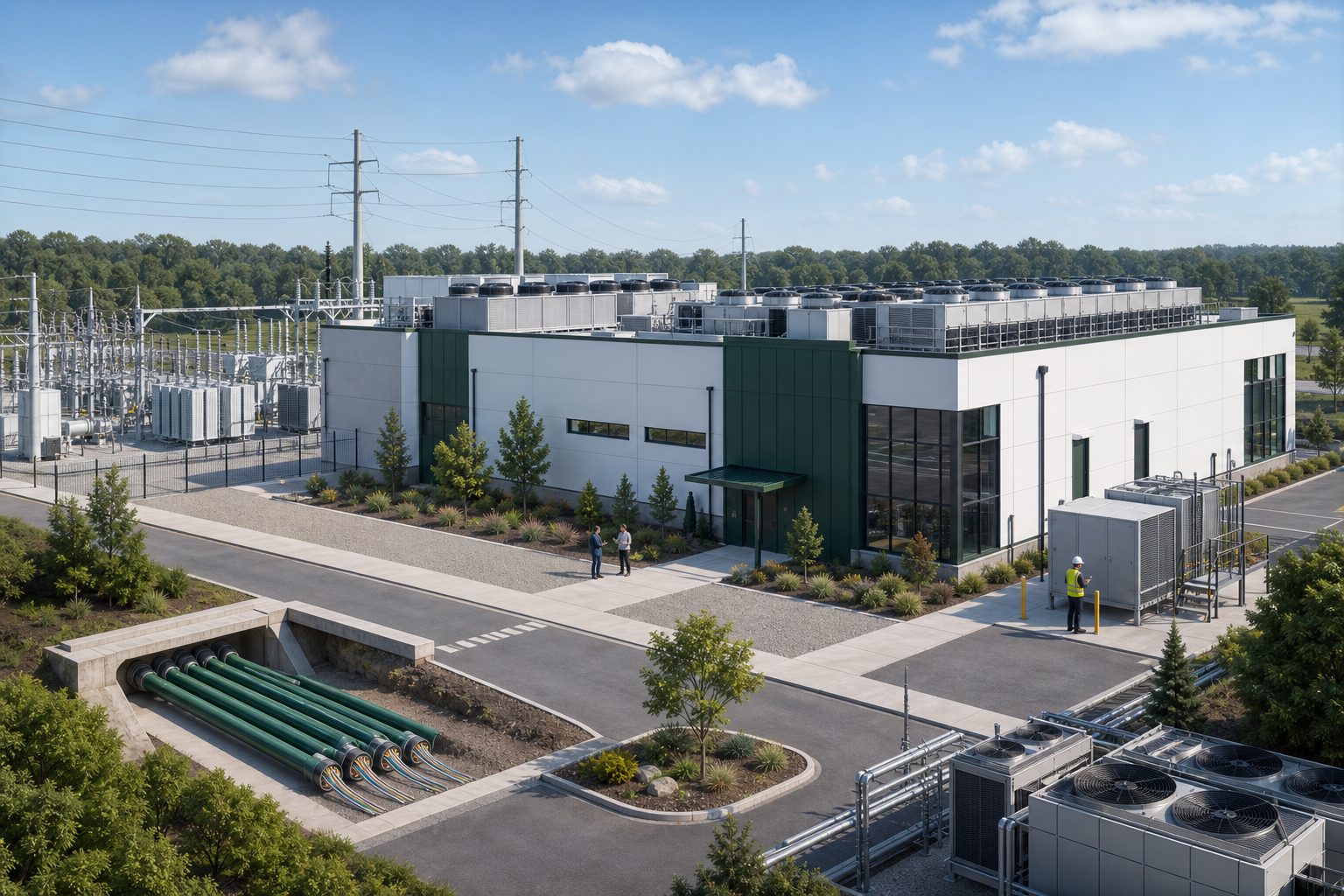
Educational illustration of a modern data center campus with power, cooling, network, and people
Power How much load, when it arrives, and who pays for upgrades.
Water Cooling design, source, annual use, and drought planning.
People Construction roles, operations jobs, vendors, and training.
Place Zoning, noise, screening, traffic, taxes, and local fit.

How to evaluate any data center claim

A useful conversation moves from a broad claim to project-specific facts.

Identify the type Enterprise, colocation, hyperscale, edge, AI/HPC, or a mix.
Ask for actual design details Power load, cooling system, water source, backup power, site layout, and phasing.
Separate total use from local impact A large user can still be planned fairly if infrastructure, rates, and protections are clear.
Require measurable commitments Use conditions, reporting, utility coordination, noise limits, and emergency plans.

Start by audience

Residents

What should I ask at a public meeting?

Ask what type of data center is proposed, what cooling system it uses, how much power it needs, who pays for upgrades, how noise is controlled, and what the community receives in return.

City Officials

What should be reviewed before approval?

Review utility studies, water disclosure, zoning fit, sound modeling, generator testing, construction traffic, emergency response, tax impact, and enforceable operating conditions.

Schools

How can this become a learning topic?

Use data centers to teach electricity, cooling, networks, internet services, AI, cybersecurity, environmental tradeoffs, careers, and responsible technology use.

Developers

What helps build trust?

Bring plain-language answers early: load ramp, water source, cooling type, noise controls, site screening, generator limits, utility coordination, workforce plans, and community benefits.

The core systems

Compute Servers, CPUs, GPUs, storage, and software do the digital work.
Power Utility service, switchgear, UPS systems, batteries, generators, and distribution keep equipment online.
Cooling Air, chilled water, liquid cooling, dry coolers, or evaporative systems remove heat.
Network Fiber routes, switches, routers, and carriers connect people and applications.
Operations Technicians, electricians, security teams, vendors, and facility staff keep the site running safely.

Quick questions that cut through confusion

Water

How much, from where, and under what conditions?

Water impact depends on cooling type, local climate, annual consumption, peak-day use, and source.

Power

What is the load ramp and who pays for upgrades?

Power impact depends on utility planning, rate design, interconnection, and cost allocation.

Type

What kind of data center is this?

Enterprise, colocation, hyperscale, edge, and AI/HPC facilities can have very different impacts.

Bottom line: A data center should be judged by its actual design, location, utility plan, cooling system, community protections, and long-term value. The label alone is not enough.